

1. High-pressure oxygen enters the regulator
When the medical oxygen cylinder valve is opened, high-pressure oxygen enters the regulator through the oxygen-specific inlet connection.
2. First-stage pressure reduction
The first pressure-reduction chamber lowers the cylinder pressure to an intermediate pressure. This protects the second stage from the full cylinder pressure.
3. Second-stage pressure stabilisation
The second chamber reduces the intermediate pressure to the required working pressure. Because pressure reduction takes place in two stages, the outlet pressure remains more stable as the cylinder empties.
4. Diaphragm and spring control the pressure
Inside the regulator, a spring applies force to a flexible diaphragm. The diaphragm responds to changes in outlet pressure and moves the internal valve seat.
- When the outlet pressure falls, the valve opens further.
- When the outlet pressure reaches the selected level, the valve partially closes.
- This balancing action maintains a controlled outlet pressure.
5. Gauges display pressure conditions
The regulator contains two gauges:
- Cylinder-pressure gauge: Shows the pressure inside the oxygen cylinder.
- Outlet-pressure gauge: Shows the pressure delivered by the regulator.
Cylinder pressure gives an approximate indication of how much compressed oxygen remains.
6. The flowmeter controls litres per minute
The MOX regulator controls pressure, not the exact patient flow rate. A separate BPC flowmeter or calibrated flow-control device is connected after the regulator to set the required flow in litres per minute.
A common medical flowmeter range is 0 to 15 LPM, although other ranges may be used depending on the application.
7. Safety valve protects against excess pressure
If the outlet pressure rises abnormally because of regulator-seat leakage or another internal fault, the safety-relief valve releases excess pressure. This helps protect downstream equipment, medical staff and patients.
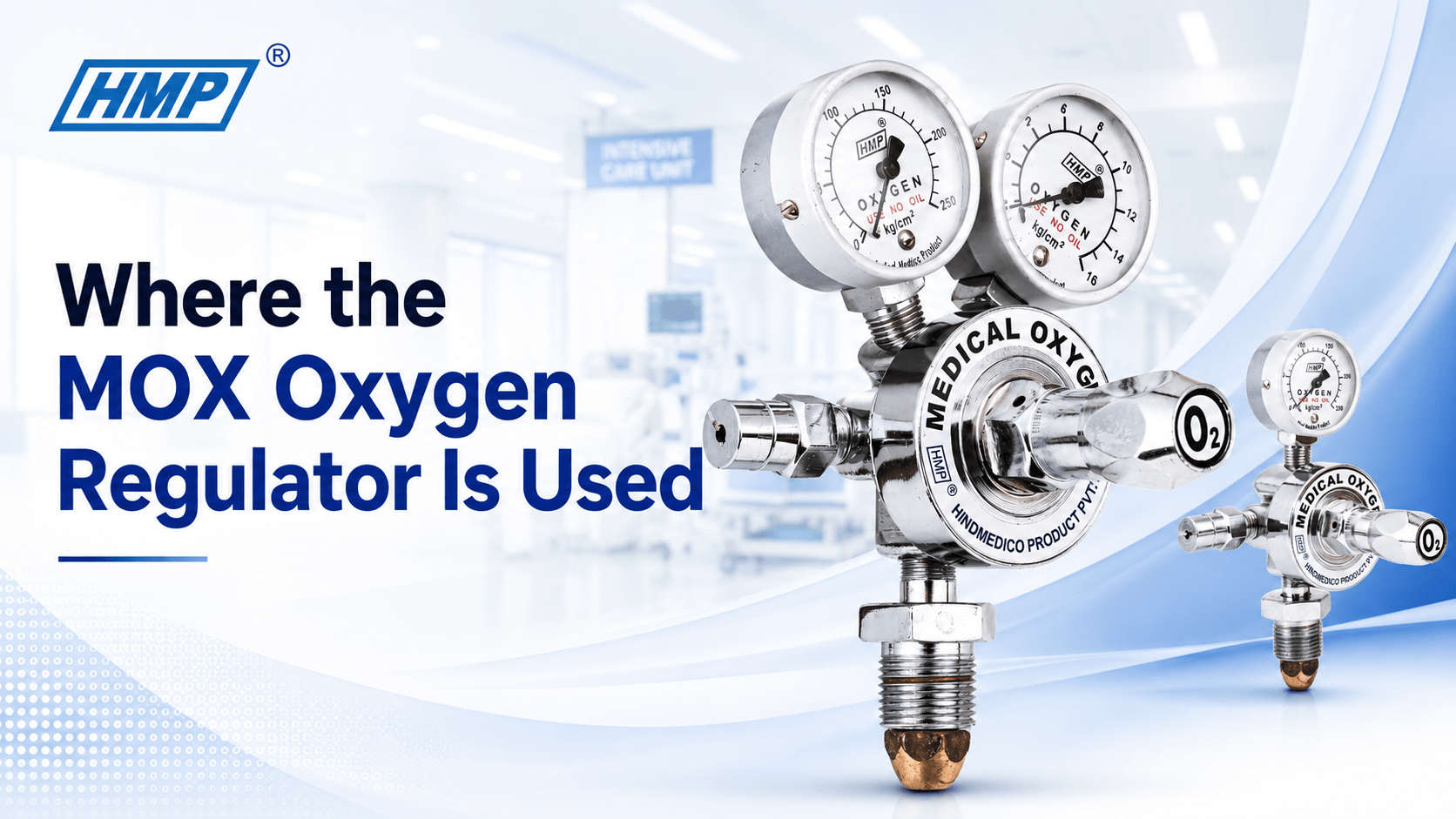
Where the MOX Oxygen Regulator Is Used
The HMP MOX Medical Oxygen Regulator can be used in:
Hospitals
For controlled oxygen supply in wards, emergency departments, intensive-care areas and operation theatres.
Nursing homes
For bedside medical oxygen administration and emergency oxygen arrangements.
Clinics and healthcare centres
For oxygen therapy and basic respiratory-support applications.
Ambulances
For portable emergency oxygen systems, provided the cylinder and regulator are securely installed.
Operation theatres
For connecting a medical oxygen cylinder to anaesthesia machines or associated oxygen-delivery equipment through approved connectors and hoses.
Emergency and trauma care
For supplying oxygen during emergency stabilisation, resuscitation and transportation.
Home oxygen systems
For cylinder-based home oxygen therapy prescribed and supervised by a qualified healthcare professional.
Medical gas pipeline backup
It may be connected to a pipeline arrangement through a suitable approved adaptor when permitted by the system design.
Oxygen is widely used for respiratory illness, surgery, trauma, maternal care, neonatal care and other clinical applications where oxygen therapy is indicated.
Suitable Equipment Connections
The MOX regulator may be connected to:
- BPC flowmeter
- BPC flowmeter with humidifier bottle
- Oxygen flow-control valve
- Anaesthesia machine
- Oxygen mask
- Nasal cannula
- Resuscitation equipment
- Approved oxygen hose assembly
- Medical oxygen pipeline system through a suitable adaptor
The exact oxygen dose and flow rate must always be determined by a qualified healthcare professional.
Key Product Features
Double-stage pressure control
The two-stage design provides stable outlet pressure across changing cylinder-pressure conditions.
Double-gauge monitoring
Separate gauges allow simultaneous monitoring of cylinder and delivery pressure.
Forged-brass construction
The forged-brass body provides mechanical strength, pressure resistance and long operational life.
Chrome-plated finish
Chrome plating gives the regulator a clean medical appearance and improves surface corrosion resistance.
Pressure-relief protection
The integrated safety valve helps protect the downstream system if abnormal outlet pressure develops.
Adjustable pressure control
The pressure-adjustment mechanism allows the operator to set the required delivery pressure within the approved operating range.
Easy connection
The regulator can be installed directly on compatible medical oxygen cylinders without a complicated external pressure-control assembly.
Stable performance
The diaphragm-and-spring mechanism compensates for pressure changes and maintains controlled oxygen delivery.
Serviceable design
Internal components can be inspected and serviced by trained medical-gas technicians using oxygen-clean procedures.
Product Benefits
- Converts high cylinder pressure into usable medical working pressure
- Helps maintain consistent oxygen delivery
- Provides clear monitoring of cylinder and outlet pressure
- Supports flowmeters, humidifiers and anaesthesia systems
- Reduces pressure fluctuation during cylinder use
- Suitable for hospitals, clinics and emergency services
- Robust brass construction
- Designed specifically for medical oxygen service
- Safety-relief mechanism for overpressure protection
- Suitable for institutional and bulk procurement
Installation Procedure
Installation should be carried out only by trained personnel.
- Secure the oxygen cylinder vertically using an approved cylinder stand or chain.
- Confirm that the cylinder valve and regulator are both intended for medical oxygen.
- Inspect the inlet connection and sealing washer for damage or contamination.
- Make sure the regulator control knob is fully released before opening the cylinder.
- Connect the regulator without using oil, grease or petroleum-based sealing products.
- Tighten the connection using the correct clean tool.
- Stand to one side of the pressure gauges.
- Open the cylinder valve slowly.
- Check the cylinder-pressure gauge.
- Check all connections for leakage using an approved oxygen-compatible leak-detection solution.
- Set the required outlet pressure.
- Connect the approved flowmeter, humidifier or medical equipment.
- Adjust the oxygen flow according to the healthcare professional’s instruction.
Important Oxygen Safety Instructions
Medical oxygen strongly supports combustion. Oil, grease and hydrocarbon-based substances can react violently in pressurised oxygen systems. Oxygen regulators and their tools must therefore remain clean and free from oil, grease, petroleum jelly and other combustible contamination.
- Never apply oil or grease to any regulator connection.
- Do not handle the regulator with oily or contaminated hands.
- Open the cylinder valve slowly to prevent rapid pressure build-up.
- Keep the cylinder away from flames, smoking, sparks and heat.
- Never use an oxygen regulator for nitrous oxide, carbon dioxide or another gas.
- Use only gas-specific cylinder connections.
- Secure the cylinder before opening it.
- Do not lift or transport the cylinder by holding the regulator.
- Never modify the safety valve.
- Do not use damaged gauges, cracked lenses or bent connections.
- Stop using the regulator immediately if leakage, unstable pressure or unusual noise is observed.
- Service the regulator only at an authorised medical-gas service facility.
- Keep oxygen-contact components clean for oxygen service.
- Replace damaged seals only with approved oxygen-compatible components.
- Close the cylinder valve after use and release trapped downstream pressure.
- Store the regulator in a clean, dry and dust-free location.
Maintenance Guidelines
Before every use
Check the regulator for:
- Physical damage
- Loose gauges
- Damaged threads
- Missing or worn sealing washers
- Contamination
- Pressure leakage
- Irregular gauge movement
Periodic servicing
Periodic servicing should include:
- Leak testing
- Gauge-accuracy verification
- Diaphragm inspection
- Valve-seat inspection
- Safety-relief valve testing
- Oxygen-compatible cleaning
- Replacement of approved seals
- Outlet-pressure calibration
The service interval should be based on frequency of use, manufacturer instructions and applicable medical-device requirements